
Keyword research is the backbone of any serious SEO strategy for wedding photographers. Without the right terms, even the most stunning portfolio remains invisible online. Choosing the right keywords directly shapes your visibility in search results, the quality of leads you attract, and the number of bookings you close each month. Yet SEO for wedding photography goes far beyond inserting phrases into a webpage — it requires understanding how couples actually search, what they genuinely need, and how to align that intent with structured, relevant content. In this guide, we cover the main keyword categories, high-volume terms worth targeting, long-tail keyword strategy, smart placement techniques, and the most damaging myths to avoid. SEO is learnable, actionable, and does not require expensive tools to get started.
The main categories of keywords wedding photographers should target
Location-based keywords
Location-based keywords rank among the most powerful tools for attracting local clients actively searching for a photographer in their area. When a couple types "wedding photographer in Chicago" or "wedding photography near me" into Google, they are ready to engage. These searches carry strong commercial intent — the person behind that query is not browsing casually. Phrases like "best wedding photographers near me" or "affordable wedding photographers near me" signal a buyer who is evaluating options and close to making a decision.
To compete effectively in local search results, these terms must appear across your entire digital presence. Website content, meta titles, meta descriptions, page headers, blog posts, and your Google Business profile should all consistently reflect your geographic service area. A photographer in Austin who never mentions the city by name will struggle to outrank competitors who have made location specificity a core part of their content strategy.
Targeting your real service area — not just your city but surrounding towns and regions where you actually work — helps build authority in those local search results. Consistency across every touchpoint strengthens the signal Google uses to match your website with nearby couples searching for a photographer.
Style-based and differentiating keywords
Style keywords attract clients who are searching for a specific photographic aesthetic. Terms like fine art wedding photography, documentary wedding photographer, candid wedding photographer, cinematic wedding photography, or light and airy wedding photographer all serve a precise function : they filter out couples who would not be a good fit and draw in those who genuinely connect with your visual language.
Crucially, style keywords should only be used when your portfolio genuinely reflects the described aesthetic. Claiming an editorial or photojournalistic style while your gallery shows heavily posed images creates a mismatch that drives bounce rates and erodes trust. Google notices, and so do clients.
Beyond style, differentiating keywords describe what makes your photography business uniquely valuable. Niche offerings like elopement packages, bridal boudoir sessions, destination wedding photography, or moody wedding photography set you apart in competitive markets. A luxury wedding photographer and a budget wedding photography specialist both serve real audiences — the keywords you choose determine which audience finds you first.
Service, package, and event-specific keywords
Service-specific and event-specific keywords target clients who are deeper in the decision-making process. Phrases such as "wedding photography packages," "wedding photography prices and packages," or "elopement photography packages" attract couples who have already decided they want a photographer and are now comparing offers. These terms convert at higher rates precisely because the search intent is transactional.
Event-specific terms like ceremony photography, first look photos, reception photography, getting-ready photos, or couple's portrait session demonstrate expertise in capturing specific wedding moments. Mentioning these in your service pages signals to both Google and potential clients that you understand the full arc of a wedding day — from the quiet moments before the ceremony to the final dance of the evening.
High-volume keywords for wedding photography worth knowing
The top search terms and their monthly volume
Understanding search volume helps prioritize which terms to pursue first. The table below presents a selection of high-traffic keywords relevant to the wedding photography market, with their approximate monthly search volumes :
| Keyword | Monthly searches |
|---|---|
| Wedding photoshoot | 90,500 |
| Photographer for wedding | 74,000 |
| Wedding photography | 60,500 |
| Wedding photographers near me | 40,500 |
| Wedding photographer cost | 12,100 |
| Wedding photography packages | 8,100 |
| Best wedding photographers | 4,400 |
High search volume signals strong potential organic traffic, but also intense competition. Newer or smaller photography businesses rarely rank for "wedding photography" alone. Keyword difficulty is a crucial metric — the harder a term is to rank for, the more domain authority and backlinks are required to compete. Pairing high-volume terms with location or style modifiers dramatically improves your chances of appearing in search results.
Mid-range and niche keywords with strong conversion potential
Mid-range terms often deliver better returns for independent photographers. Affordable wedding photographer draws 3,600 monthly searches, while destination wedding photographer attracts 1,900. Terms like "fine art wedding photography" and "photojournalistic wedding photography" each generate 720 monthly searches — smaller numbers, but from couples who know exactly what they want.
A luxury wedding photographer targeting 880 monthly searches or an elopement photographer near me capturing 590 searches may seem modest. But these phrases attract warm leads with a clear purchase intent. The same logic applies to niche offerings : drone wedding photography, Asian wedding photography, bridal boudoir photography, and alternative wedding photographer all serve defined audiences who are actively looking for a specialist.
Just as we explore in our travel SEO keywords list for travel agencies, targeting mid-range, intent-rich terms often outperforms chasing the most searched phrases in any service-based industry.

Why long-tail keywords are a wedding photographer's best-kept SEO secret
What makes long-tail keywords different
Long-tail keywords are specific phrases of three or more words. They carry lower search volume but significantly less competition and notably higher conversion rates. While "wedding photographer" attracts enormous traffic, ranking for it is effectively impossible for most independent studios. A phrase like "documentary wedding photographer in Austin" or "fine art wedding photographer in New York City" draws fewer monthly searches — but the visitors it brings are far more likely to book.
Specificity is not a weakness here — it is a competitive advantage. A couple searching for a "candid wedding photographer in Portland" has already filtered their options. They know what style they want, they know their city, and they are actively evaluating photographers. Meeting that search with a perfectly matched page is one of the most efficient uses of SEO effort available to a photography business.
Keyword difficulty scores tend to be much lower for long-tail phrases. That means even newer websites can realistically rank on the first page of Google for these terms, generating steady organic traffic without needing years of backlink building.
How to use long-tail keywords in blog content
Blog posts are the ideal vehicle for long-tail keyword targeting. Each post can focus on a unique phrase — a venue name paired with a city, a photography style combined with a location, or a planning question phrased exactly as a client would type it. Examples include "mountain elopement photography in Colorado," "how to choose a wedding photographer," or "candid wedding photographer in Seattle."
The power of blogging compounds over time. Accumulating multiple keyword-targeted posts creates a web of content that collectively captures organic traffic across dozens of relevant searches. Unlike social media posts that disappear within days, well-optimized blog content continues attracting visitors for months or years. This evergreen quality makes blogging one of the most cost-effective strategies available in wedding photography marketing.
- FAQ posts answering common questions, such as what to wear for engagement photo sessions
- Venue-specific posts targeting couples researching local wedding venues
- Season-specific content covering outdoor wedding photography in fall or summer
- Style guides explaining the difference between fine art, editorial, and documentary approaches
- Planning guides covering wedding photography timelines and checklists
- Behind-the-scenes posts illustrating your photography process and approach
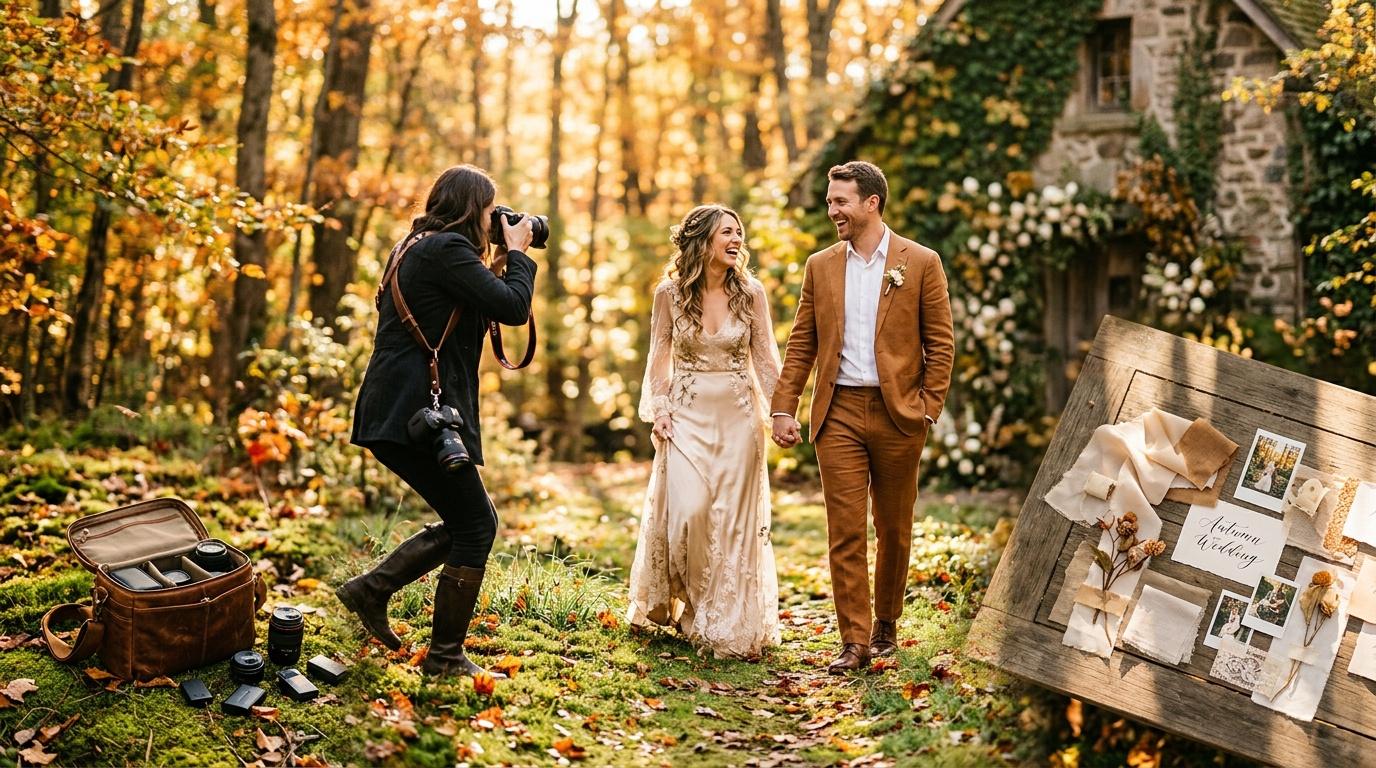
How to build a keyword map for your wedding photography website
Assigning one intent per core page
A keyword map assigns a single, clear search intent to each page of your website. Without this structure, multiple pages end up competing for the same term — a problem called keyword cannibalization — which dilutes SEO signals and reduces ranking effectiveness across the board. Each page should own its intent completely.
The homepage targets a broad brand plus location intent, such as "wedding photographer [city]." The services page goes deeper into wedding-specific service intent, explaining style and process. The pricing page targets offer intent with phrases like "wedding photography packages [city]" or "wedding photography prices and packages." Real wedding posts target specific venues combined with cities, creating proof-based content that supports venue-specific keywords. Evergreen guides cover broader planning intent — "how to choose a wedding photographer" being a classic example.
Tools like Ubersuggest, Google Keyword Planner, and platforms built specifically for SEO content generation can help identify gaps and opportunities in your current keyword map without requiring expensive subscriptions.
Defining your service area, modifiers, and first keywords to target
Building a keyword map starts with three practical steps. First, define your real geographic service area — not aspirational reach, but the cities and regions where bookings actually come from. Second, choose two to four style or type modifiers that genuinely reflect your work. Examples include documentary, fine art, elopement, or candid. Third, select an initial set of ten keywords to distribute across your core pages.
- Homepage : one broad location-plus-brand keyword
- Services page : two to three style or service-specific terms
- Pricing page : offer-intent phrases combining price and packages
- Blog posts : individual long-tail phrases for each post
This focused approach consistently outperforms building a sprawling list of hundreds of terms. Free tools are entirely sufficient — Google Search Console, Ubersuggest, and AnswerThePublic provide enough data to build a clean, effective keyword strategy from scratch.

Where and how to place keywords on your website for maximum SEO impact
Key on-page locations for keywords
On-page keyword placement follows a clear hierarchy. The meta title should make the page's intent immediately clear, combining wedding type with location. The meta description must include the target keyword and span at least 120 characters — it is your pitch to the searcher before they even click. The H1 heading should match the page's core promise in plain, direct language. Mentioning the keyword in the first paragraph signals relevance to Google early in the content.
H2 and H3 subheadings should use descriptive language aligned with the page's content sections. Image filenames and alt text offer another placement opportunity — describe the image naturally while incorporating relevant keywords. Internal links connecting blog posts, venue guides, service pages, and the pricing page should use descriptive, natural anchor text that reflects the destination page's intent. This internal linking structure also mirrors the strategy discussed in our guide on top nonprofit SEO keywords, where structured internal linking proved essential to ranking success.
Practices to avoid when placing keywords
Several common mistakes actively harm rather than help SEO rankings. Footer keyword blocks listing dozens of cities and services appear manipulative to Google and provide zero value to visitors. Copy-paste location pages — where only the city name changes across otherwise identical content — are treated as thin or spam content and rarely rank. Repetitive headings cycling through the same phrase with minor word variations dilute page authority instead of reinforcing it.
- Avoid keyword-stuffed alt text that reads unnaturally or lists terms rather than describing the image
- Avoid forcing keyword repetition with awkward phrasing that breaks reading flow
- Avoid creating city pages without unique, substantive content for each location
A focused page that clearly and thoroughly answers one search intent will naturally rank for dozens of related phrases — without needing to manually insert each variation. Google rewards relevance and clarity above all.

The most damaging SEO keyword myths wedding photographers still believe
Myths about keyword quantity and coverage
The belief that a large keyword list produces better results is one of the most persistent myths in photography SEO. A clean keyword map with one intent per page consistently outperforms a bloated list scattered thinly across dozens of pages. Adding more keywords to a single page does not improve rankings — it makes the page vague and less useful, signaling to Google that the content lacks focus.
Creating a separate page for every nearby city with duplicated content is equally counterproductive. Google identifies this pattern as thin or spam content and either ignores these pages or penalizes the domain. Targeting fewer terms with greater precision builds stronger, more durable rankings over time. A strategic approach, like those outlined in our strategic SEO guide for nonprofits, consistently proves more effective than volume-based thinking — and the same principle applies directly to wedding photography businesses.
Myths about tools, competitors, and timelines
Many photographers assume they need expensive paid tools to build an effective keyword strategy. In practice, Google Keyword Planner, Google Search Console, Ubersuggest, and AnswerThePublic are sufficient for identifying relevant terms, checking demand, and confirming search intent. Skoatch, for instance, demonstrates that AI-assisted content planning can streamline this entire process without requiring a separate suite of costly analytics subscriptions.
Copying competitor keywords is another flawed shortcut. Competitors rank for many related variations because their pages clearly match one intent — not because they targeted dozens of phrases simultaneously. Their success is rooted in focus, not breadth. Finally, SEO results typically take several months to become significant. Consistent keyword-targeted content creation compounds over time, transforming a photography website into a stable, long-term lead generation engine that works continuously — even between busy wedding seasons.