Running a jewelry business online means competing for visibility in one of the most crowded markets on Google. Choosing the right SEO keywords for your jewellery website can make the difference between page one and digital obscurity. We've compiled this comprehensive guide to help you identify the strongest terms, understand search volumes, and build a smarter content strategy around them.
The most searched jewelry keywords by category
Understanding what shoppers actually type into search engines gives your brand a real competitive edge. Keyword data reveals clear patterns across product types, price ranges, and customer intent — and the jewellery niche is particularly rich in high-volume opportunities.
General jewelry and rings keywords
The broadest terms dominate search volume by a wide margin. "Rings" alone generates over 3.5 million monthly searches, making it one of the most powerful anchors in any jewellery SEO strategy. "Jewelry" and its British spelling "jewellery" together reach nearly 4 million monthly searches across different markets.
Earrings, necklace, and bracelet each pull over one million searches per month. These category-level keywords attract massive traffic but face fierce competition. Using them as pillar page topics, while building supporting content around more specific variations, creates a strong semantic foundation for your website.
Terms like "engagement rings" (nearly 4.4 million searches), "wedding rings," and "diamond ring" show that purchase-driven queries consistently rank among the most searched in this niche. "Gold ring" reaches 882,000 monthly searches, while "jewelry stores" hits over 1.25 million — signalling strong local and commercial intent. The table below summarizes the top general keywords and their approximate monthly search volumes :
| Keyword | Monthly searches (approx.) |
|---|---|
| Rings | 3,535,000 |
| Engagement rings | 4,416,000 |
| Jewelry / jewellery | ~3,448,000 |
| Earrings | 1,631,700 |
| Necklace | 1,415,000 |
| Bracelet | 1,188,300 |
| Gold ring | 882,000 |
| Wedding rings | 1,980,000 |
Specific jewelry product keywords
Drilling deeper into product-specific keywords uncovers highly targeted opportunities for diamond rings. Queries like "2 carat diamond ring" (325,200 searches), "princess cut diamond ring," "oval diamond ring," and lab grown diamond rings each generate substantial traffic. These terms attract customers actively comparing products, which signals strong buying intent.
For engagement ring variations, "moissanite engagement rings" reaches 486,000 searches, while "unique engagement rings" and "emerald cut engagement rings" follow closely. "Vintage engagement rings" and "rose gold engagement rings" also perform well, showing that design aesthetics heavily influence search behavior in this category.
Men's ring keywords are growing fast. "Mens rings" generates 594,000 monthly searches, with "rings for men," "gold rings for men," and "mens signet ring" adding significant volume. Brands ignoring this segment are missing a substantial audience of male shoppers and gift buyers.
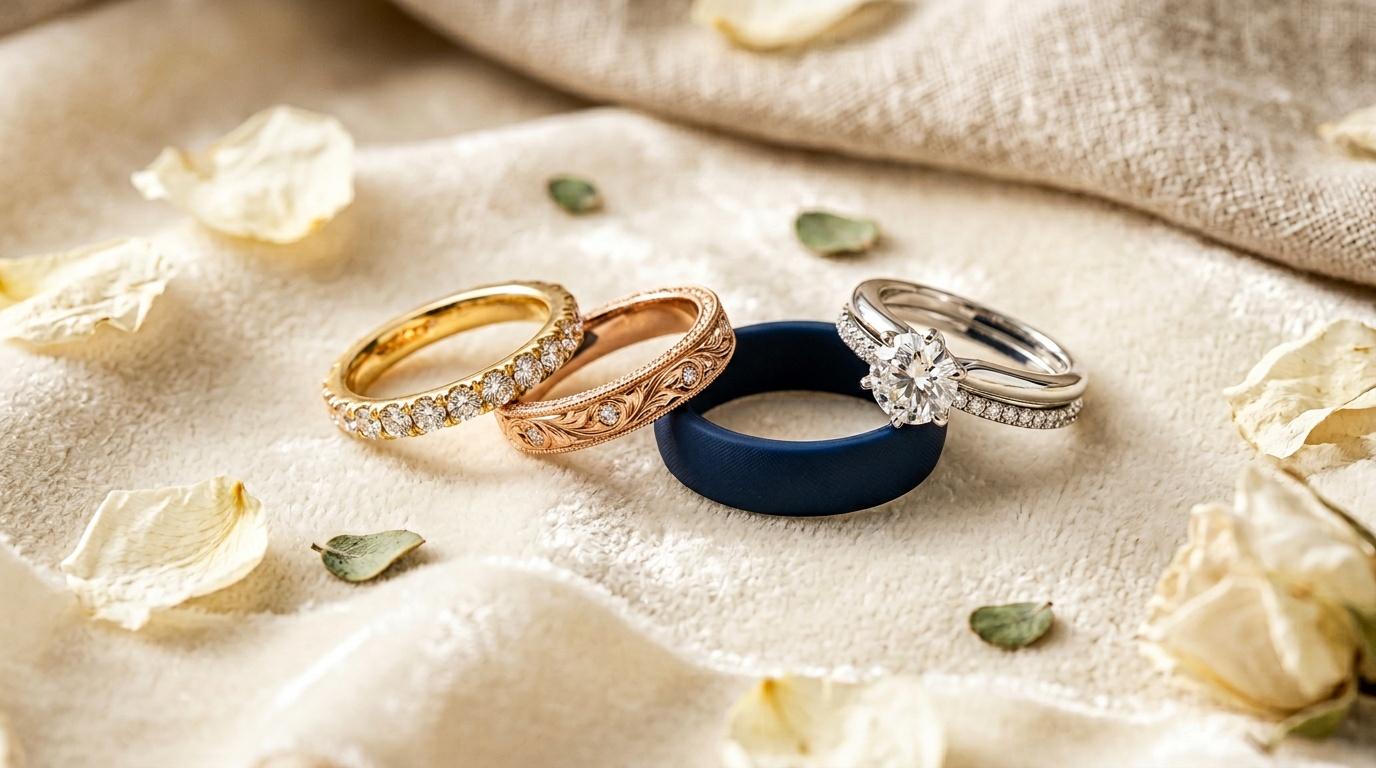
Wedding ring terms also deserve dedicated pages. "Wedding ring sets," "gold wedding rings," "vintage wedding rings," and "silicone wedding rings" each attract tens of thousands of monthly searches. Adding product-focused landing pages optimized around these terms, complete with relevant alt tags and properly structured title tags, strengthens your overall ranking potential.
How to build an effective jewelry SEO keyword strategy
Identifying keywords is only step one. Turning that data into a structured content plan requires understanding competition levels, search intent, and how customers move through the buying journey. Platforms like Skoatch, a best article generation tool powered by AI, can help automate this process at scale.
Targeting high-volume vs. long-tail keywords
Broad terms like "jewelry stores," "engagement rings," and "wedding rings" attract enormous traffic but face very high competition. Most established brands already dominate these rankings, making it difficult for newer or smaller businesses to break through without significant authority.
Long-tail keywords offer a smarter entry point. Terms like "salt and pepper diamond ring," "moss agate engagement ring," "hidden halo engagement ring," and "dainty engagement rings" each carry lower competition while attracting shoppers closer to making a purchase. These customers know what they want — they're just looking for the right store to buy it.
Other strong long-tail examples from our data include "gold ring designs for women," "silver rings for ladies," and "bridal jewellery set." Despite search volumes in the tens of thousands rather than millions, conversion rates on these terms tend to outperform generic queries significantly. Building dedicated product pages and blog content around these keywords strengthens both traffic and leads.
Organizing keywords by search intent
Search intent shapes how Google interprets and ranks content. We recommend splitting your jewellery keywords into three clear intent categories to maximize optimization efforts.
- Informational intent : keywords like "how to clean diamond ring," "average engagement ring cost," and "average cost of engagement ring" attract researchers at the start of their journey. Blog posts and guides work best here.
- Navigational intent : terms such as "jewelry stores near me," "jeweler near me," and "permanent jewelry near me" signal users looking for a specific local store. Optimizing your Google Business profile and local landing pages captures this traffic.
- Transactional intent : queries like "buy engagement ring," "diamond rings for sale," and "custom engagement rings" indicate shoppers ready to purchase. Product pages with clear pricing, quality imagery with optimized alt tags, and compelling meta descriptions convert this audience most effectively.
Platforms like Etsy rank well for many of these transactional terms because their product listings naturally match buyer intent. Your own website can compete by aligning page content, title tags, and internal linking with the right keywords at each funnel stage. A consistent content and social media strategy amplifies these efforts over time, building lasting organic visibility for your jewellery brand.